
After years of anticipation, the moment has finally arrived: the fastest train in the U.S. is set to make its debut.
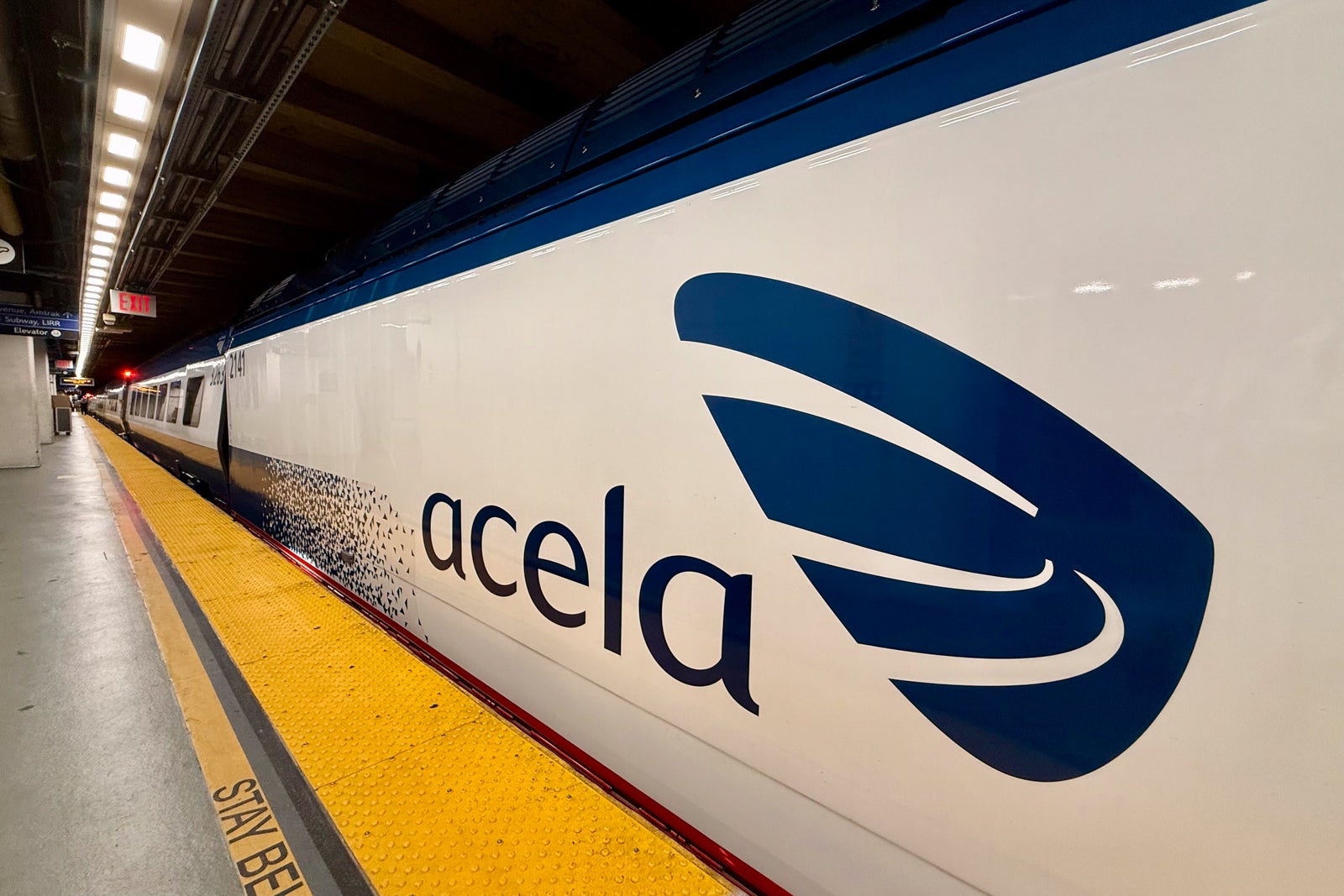
Introducing Amtrak’s new next-generation Acela, designed to theoretically reach speeds of 160 mph. Although these trainsets were delivered in 2020, they’ve been idle in the railyard for half a decade, awaiting thorough testing and final certification.
The wait is over. This Thursday marks a significant milestone for the decade-long Acela program, with the first new trainset entering revenue service on Amtrak’s Northeast Corridor.
With delays behind us, it’s time to put Amtrak’s latest offering to the test.
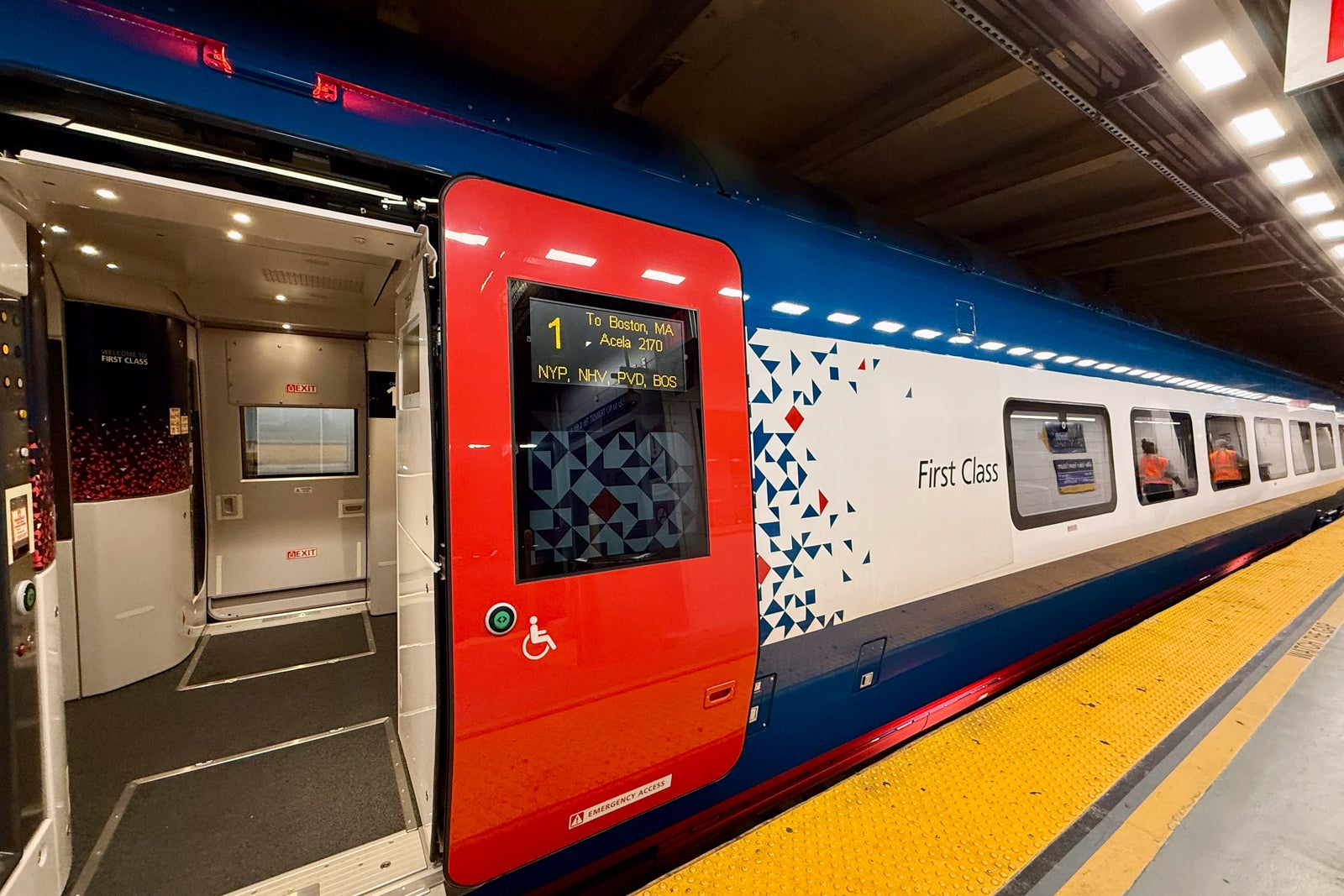
This opportunity unfolded on Wednesday, August 27, when Amtrak invited executives, key partners (including Secretary of Transportation Sean Duffy), and select media for a preview ride from D.C. to Boston.

I boarded the train in New York’s Moynihan Train Hall, experiencing multiple cars throughout the roughly four-hour journey along the Northeast Corridor.
Here’s what you need to know about the new trains:
First-Class Coach
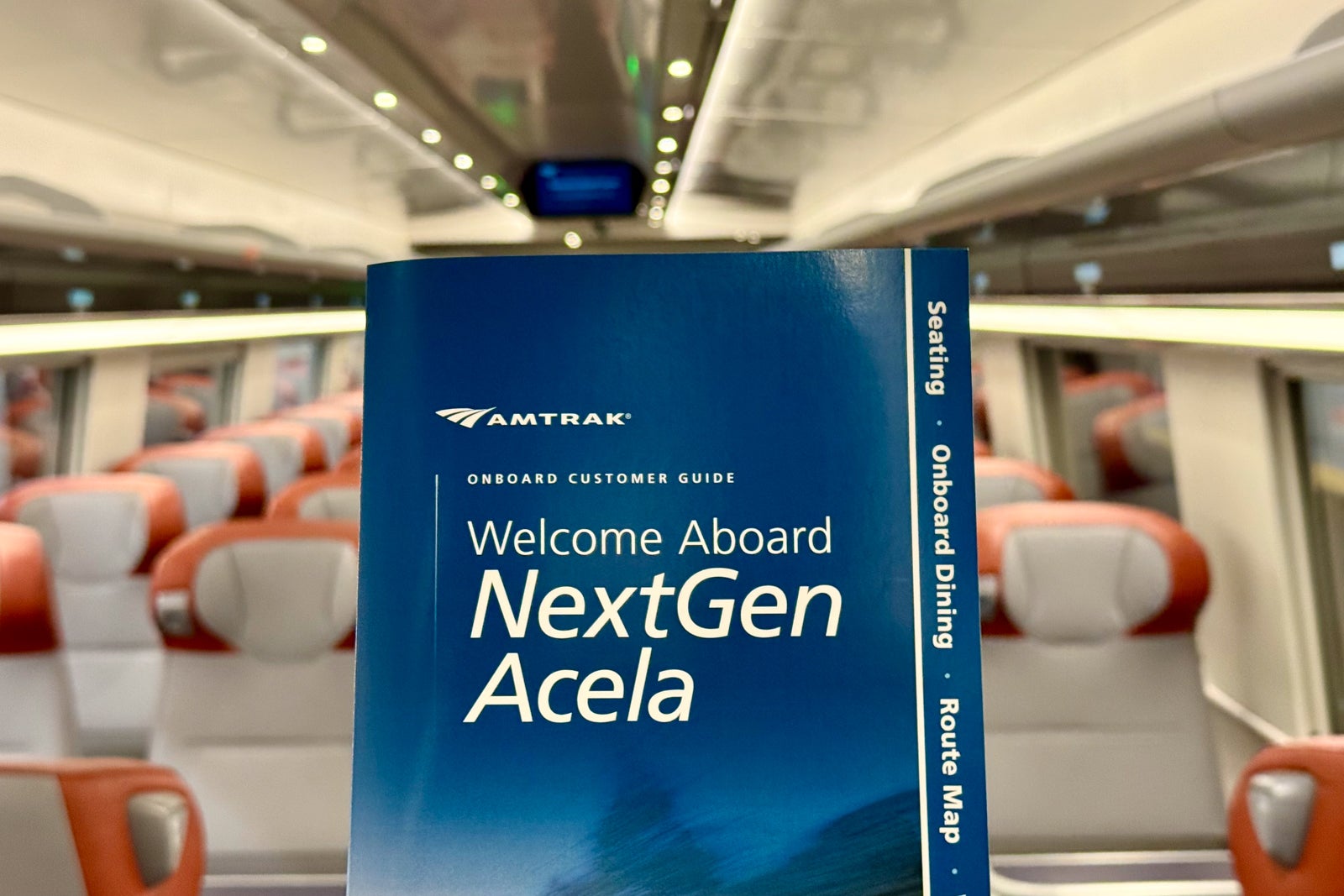
The journey begins in the first-class car, located at the front of the train in Car 1.
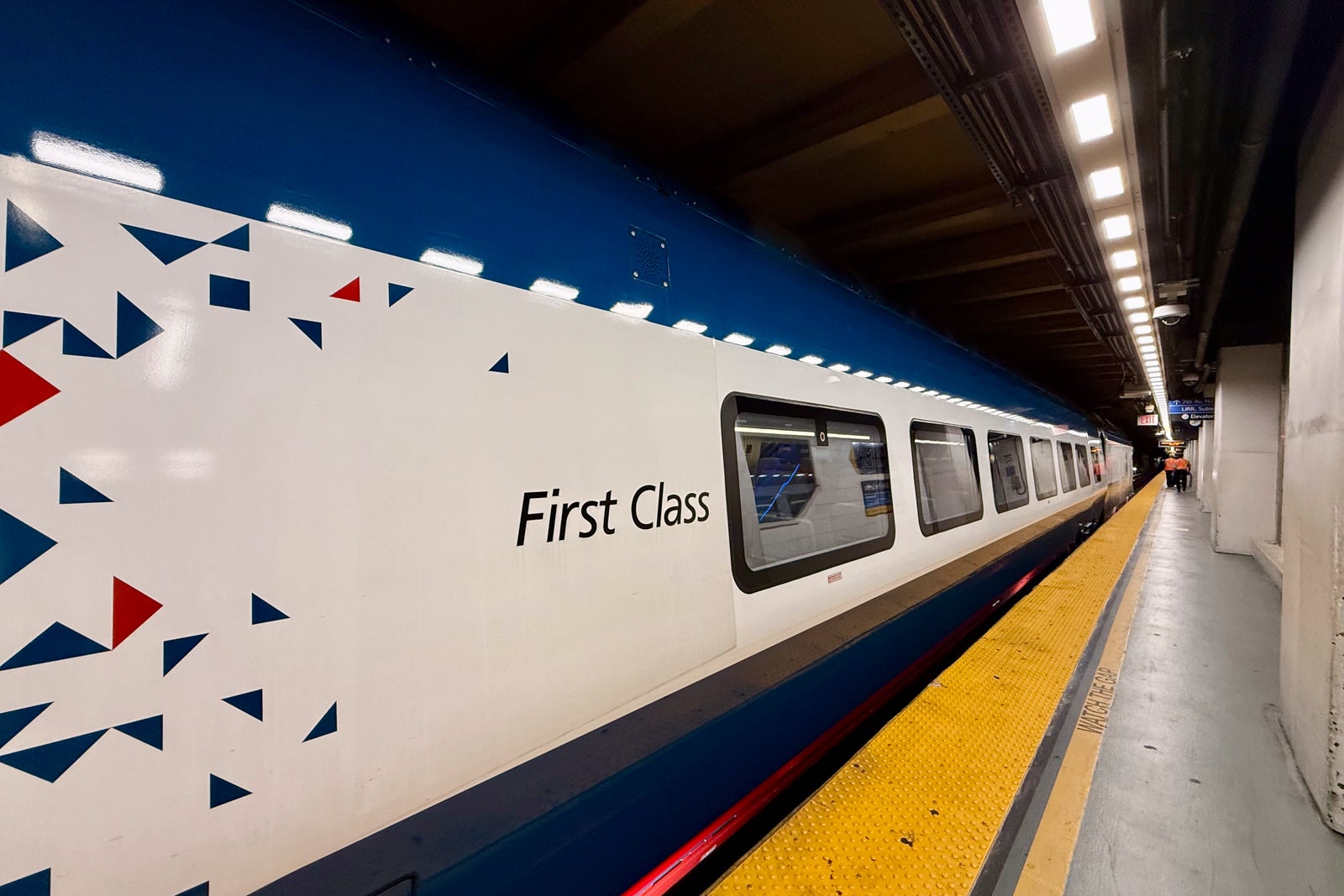
To identify a new Acela train, look for the updated and vibrant livery showcasing its legacy branding.
Enhance your inbox with the Flying Frugal Daily newsletter
Join over 700,000 readers for breaking news, in-depth guides, and exclusive deals from Flying Frugal’s experts.
Amtrak will take a cautious approach in rolling out these new trains, initially launching five out of the total 28.
They will gradually introduce more trains through 2027 while phasing out the legacy Acela trainsets.
At launch, the new trains will operate on the following routes:
- Weekdays: trains 2153, 2154, 2170, and 2173
- Saturdays: trains 2250 and 2251
- Sundays: trains 2248, 2258, 2259, and 2271
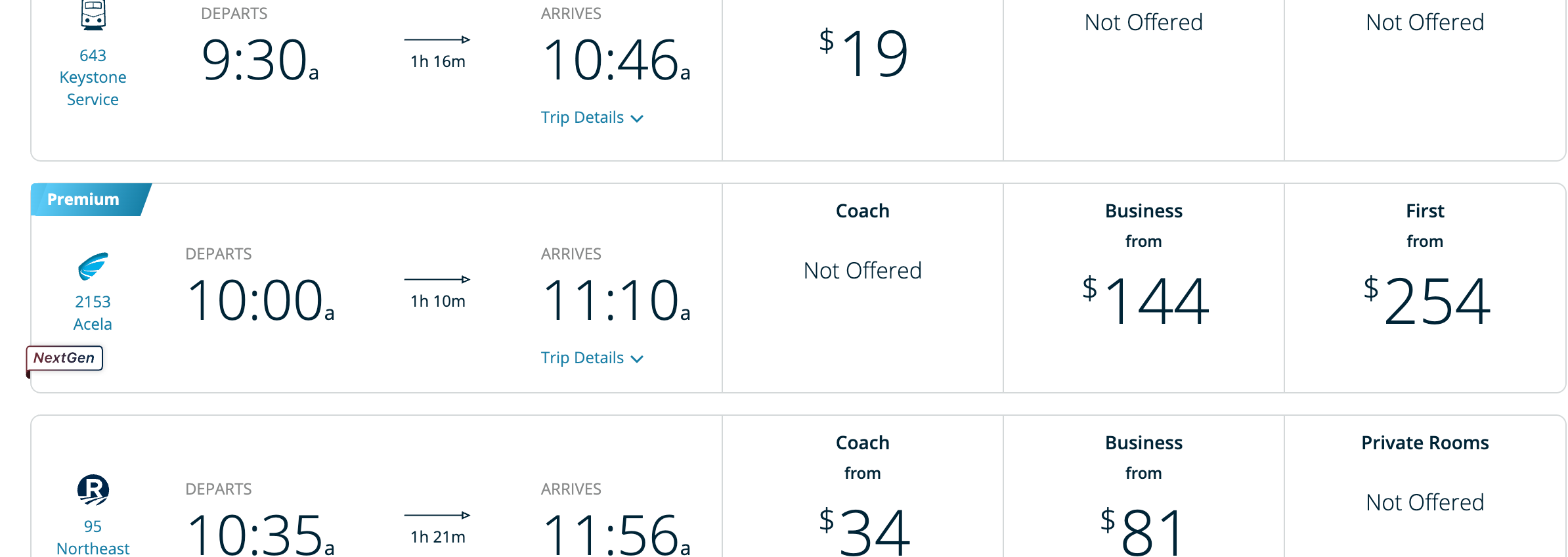
When booking through Amtrak’s website or mobile app, look for the “NextGen” label next to the route, which indicates services operated by the new Acela.
All aboard will notice the Alstom logo prominently displayed at the foot level of the train doors, reminiscent of Bombardier’s C-Series jets.
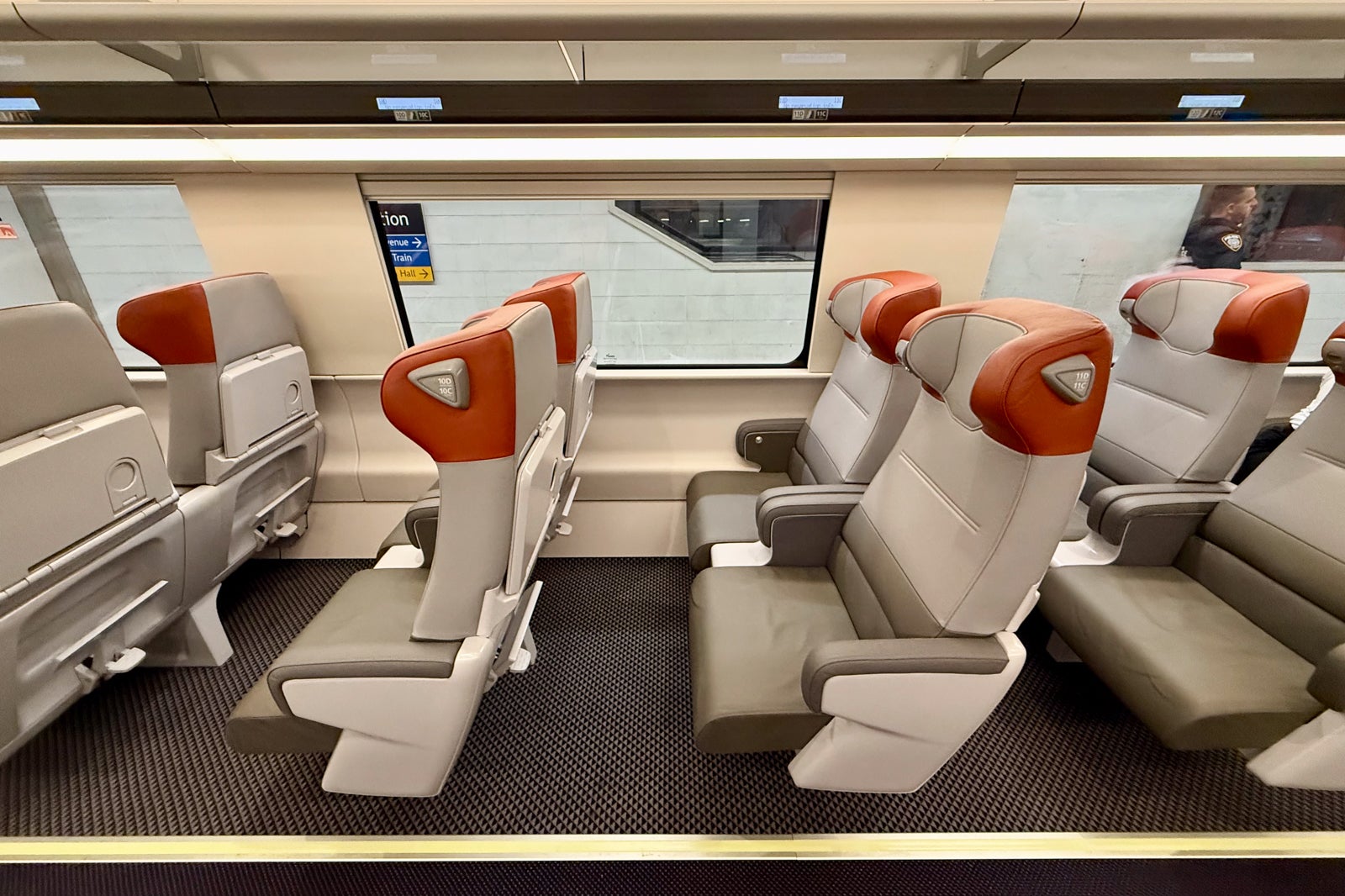
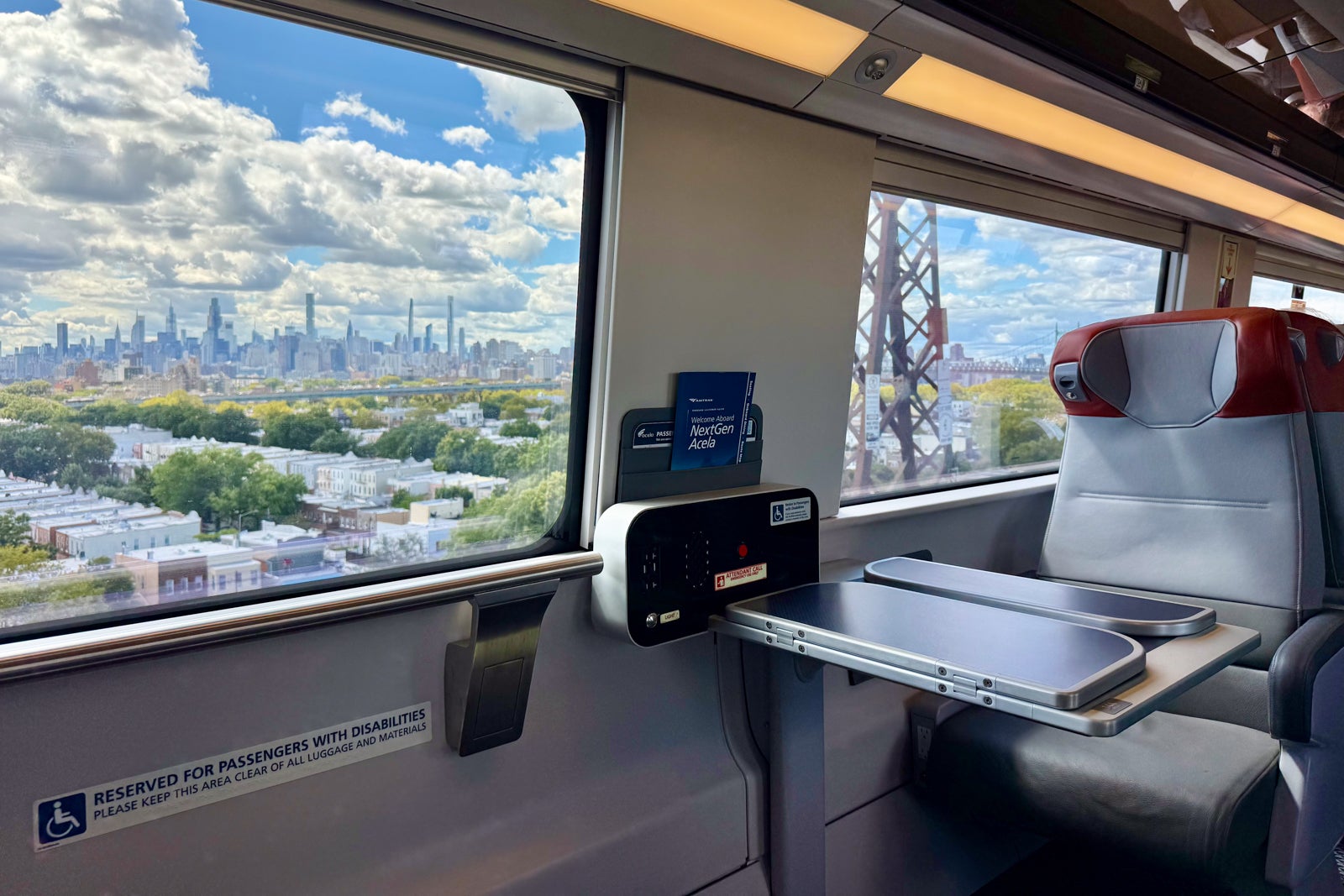
The first-class seating features a 1-2 configuration with single seats on one side and double seats on the opposite side.
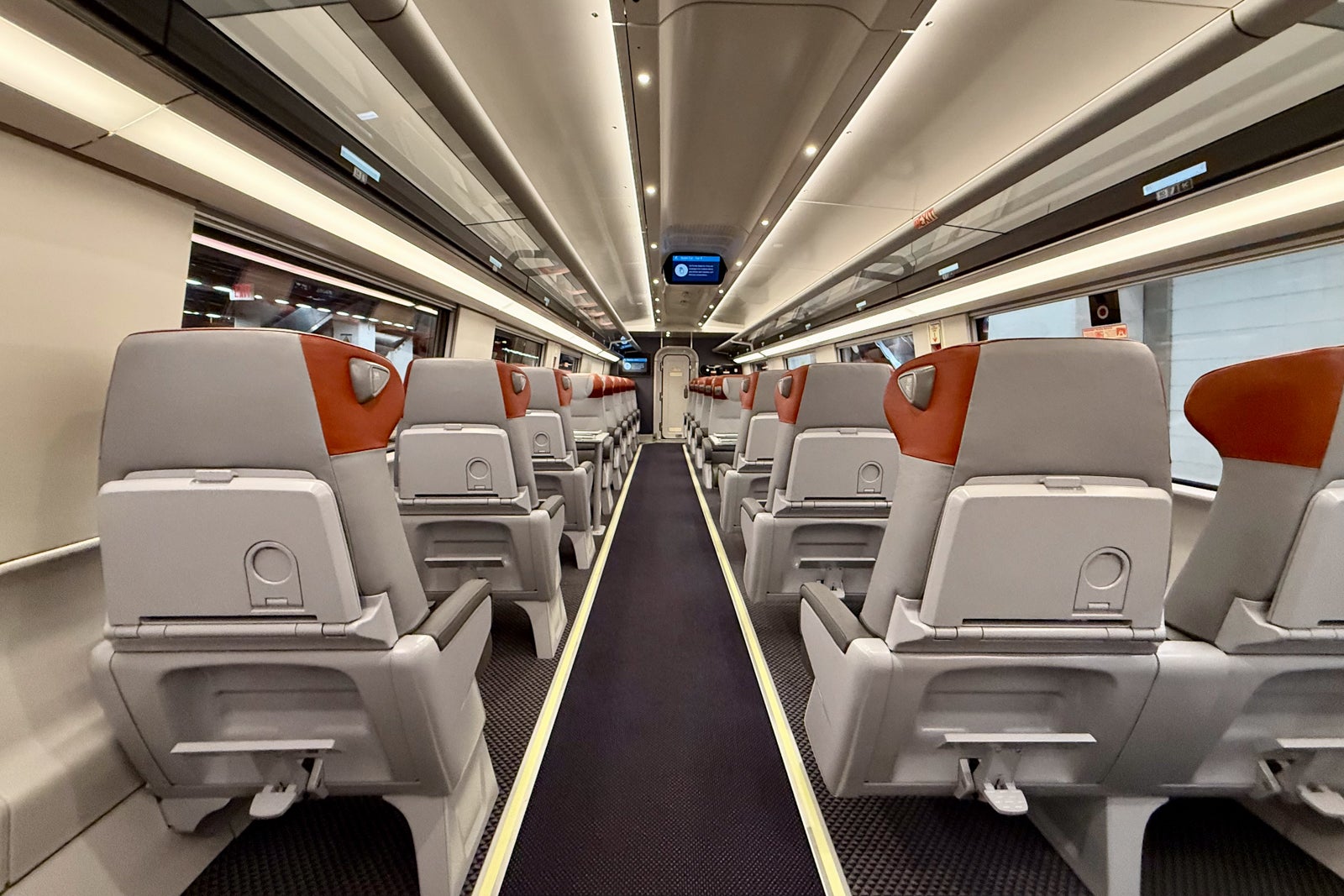
In contrast to the previous Acela design, there’s just one set of single seats sharing a table, rather than the four found on the older model.
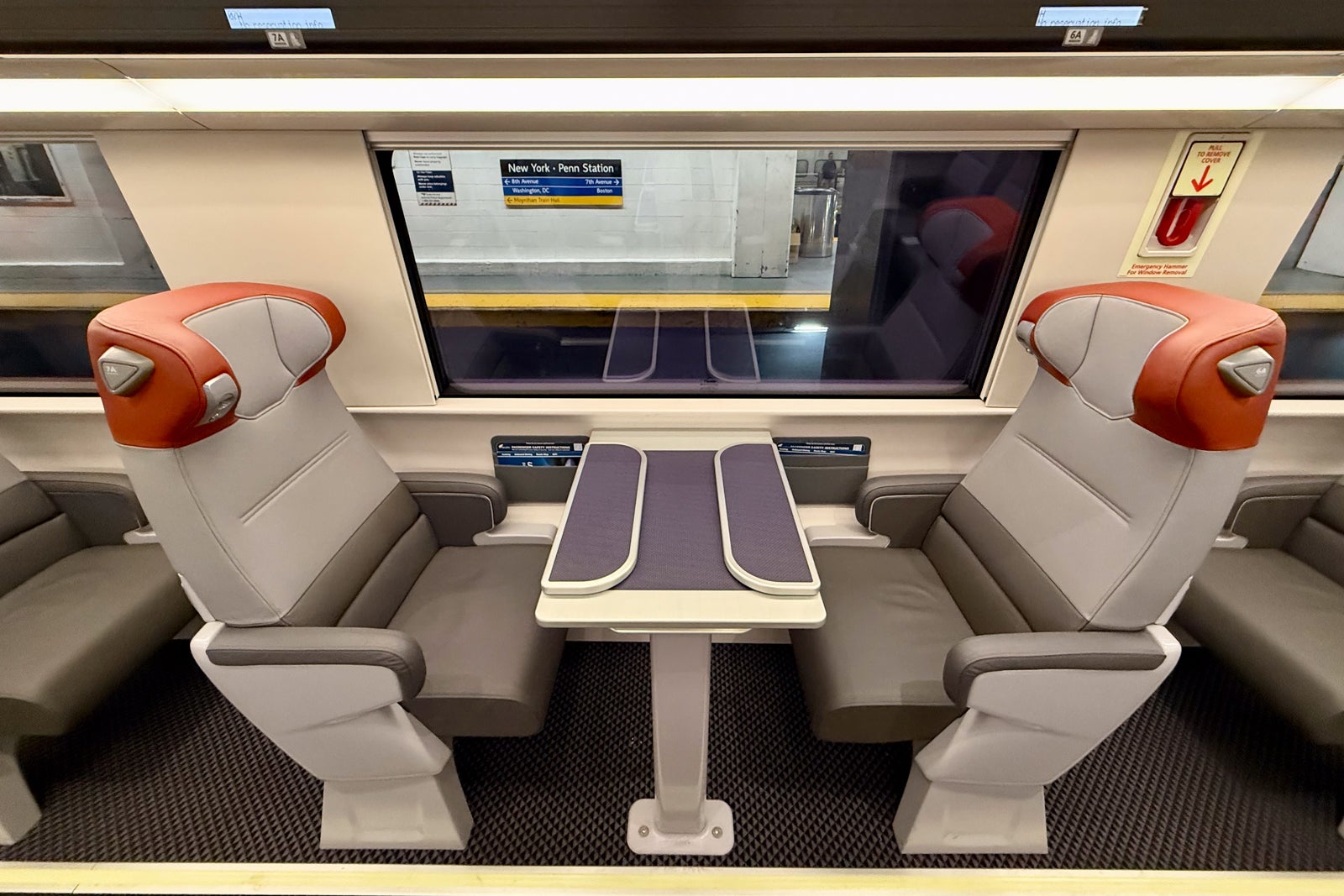
There’s just one table on the other side of the cabin as well, unlike the four in the previous configuration.
The new layout might disappoint business travelers looking for a place to convene, but it’s likely to please solo travelers who prefer not to sit at a four-seat table.

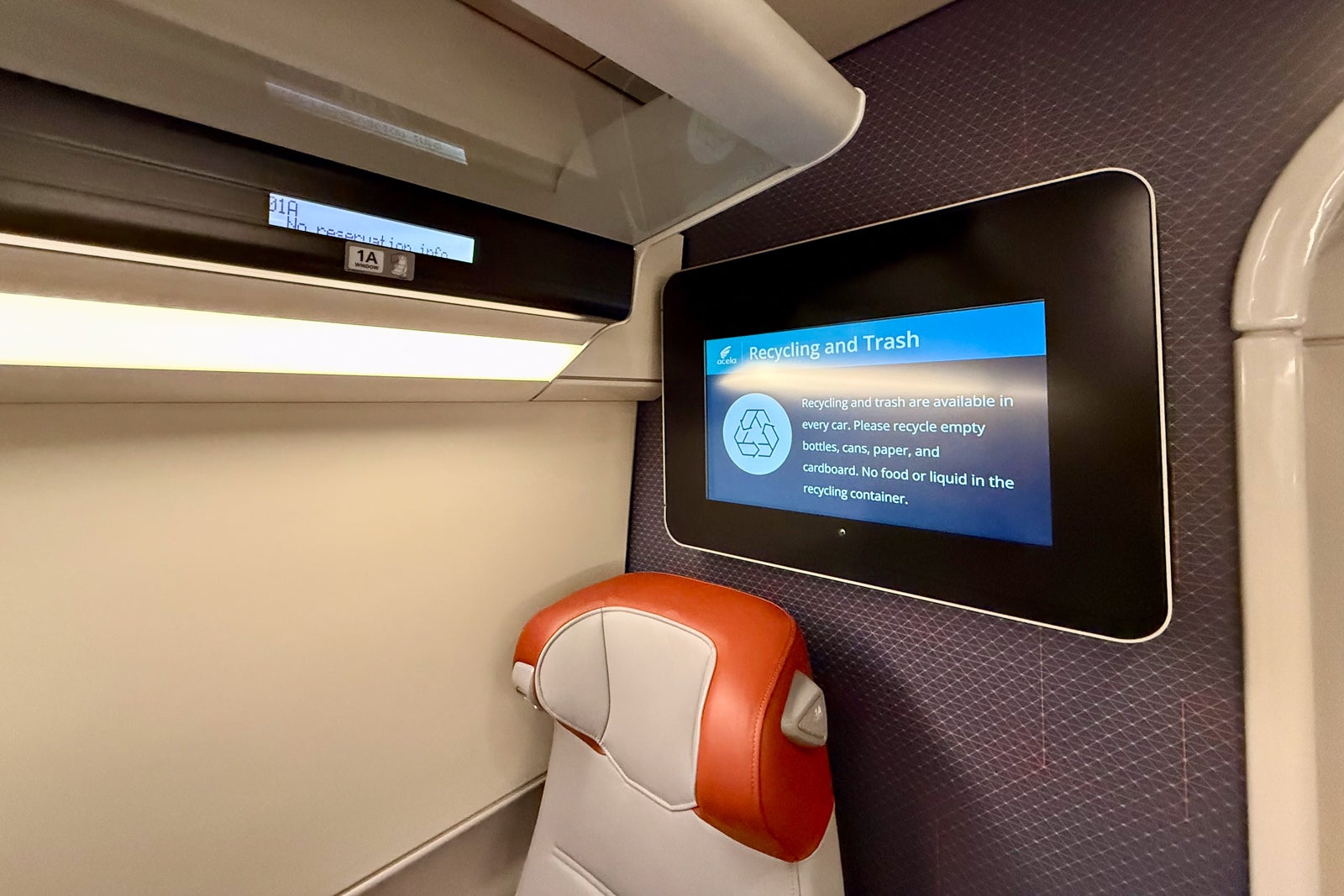
Each cabin feels notably more modern than its predecessor, with vibrant orange accents on headrests and high-definition screens displaying travel information.

Each seat is equipped with a small adjustable legrest and a tray table measuring 10.5 inches long and 17 inches wide, which might be too small for larger laptops.

The good news is that the tables can extend to enhance your workspace.

Luggage storage has been revamped, replacing overhead compartments with open storage, and larger bags can be placed at the front and back of each car.
The train vestibules are home to the lavatories, featuring automatic half-circle doors that open at the press of a button.

Users must press a button to close the door and another to lock the lavatory.
The lavatories feature touchless controls, a welcome hygiene improvement, though it may take some time to adjust to this new entry and exit process.
Business-Class Cars
Most of the train is dedicated to business-class seating.

Business-class seating features a 2-2 configuration, standard for Amtrak.
The seating alternates between forward- and rear-facing, with four tables in each car for travelers wishing to converse with colleagues or friends.

Similar to the existing Acela, all seats are assigned. There are indications Amtrak may introduce digital seat labels displaying reservation details.

The seats offer a 39 inches of pitch, three inches less than first class, and have a firmer feel, which may improve with use.

Interestingly, the seats do not recline, and the center armrests are immovable, allowing only the aisle armrests to adjust.
Pressing the recline button causes the bottom cushion to slide forward, which may be less comfortable compared to the older Acela.

Seating at a table may lead to close quarters, as the cushion can slide forward and your knees might touch the table.

The business class amenities mirror those found in first class, including two AC power outlets and two USB-A ports per pair of seats. However, they lack the more modern USB-C ports.
A built-in reading light is also available in each headrest.
Amtrak has significantly upgraded the Wi-Fi in the new Acela, leveraging 5G cellular networks along the route. This leads to impressive speed results; I reliably measured over 100 Mbps for downloads and around 30 Mbps for uploads during my tests.

However, certain sections of the Northeast Corridor still experience poor cellular reception, which may negatively affect your internet experience.
Cafe Acela
The new “Cafe Acela” represents a significant upgrade in the cafe car.

For the first time, passengers can quickly grab snacks and drinks from grab-and-go fridges and complete their purchase on a built-in tablet, streamlining the experience.

Passengers can still order hot items at the counter, and business class benefits from cart service, while first class passengers enjoy a la carte meals served by dedicated attendants.
1 of 3
ZACH GRIFF/Flying Frugal
The cafe car also features bar-style standing areas at the back, intended for quick visits or phone calls.
Bottom Line
The next-generation Acela train marks a significant enhancement to rail travel in the Northeast.

The modern enhancements—like new LED reading lights, refreshed color schemes, and faster Wi-Fi—promise to enhance travel between major cities.
While the train’s design resembles some offerings in Europe, it regrettably doesn’t address the infrastructure upgrades that Amtrak desperately needs on the Northeast Corridor.

While the new trains may not operate at top speeds throughout the journey, they represent a crucial step forward, especially in alleviating equipment-related cancellations affecting the current Acela fleet.
Despite advertised speeds reaching 160 mph, the actual implementation will be limited to brief stretches until infrastructure improvements are made by Amtrak and regional stakeholders.